About Me
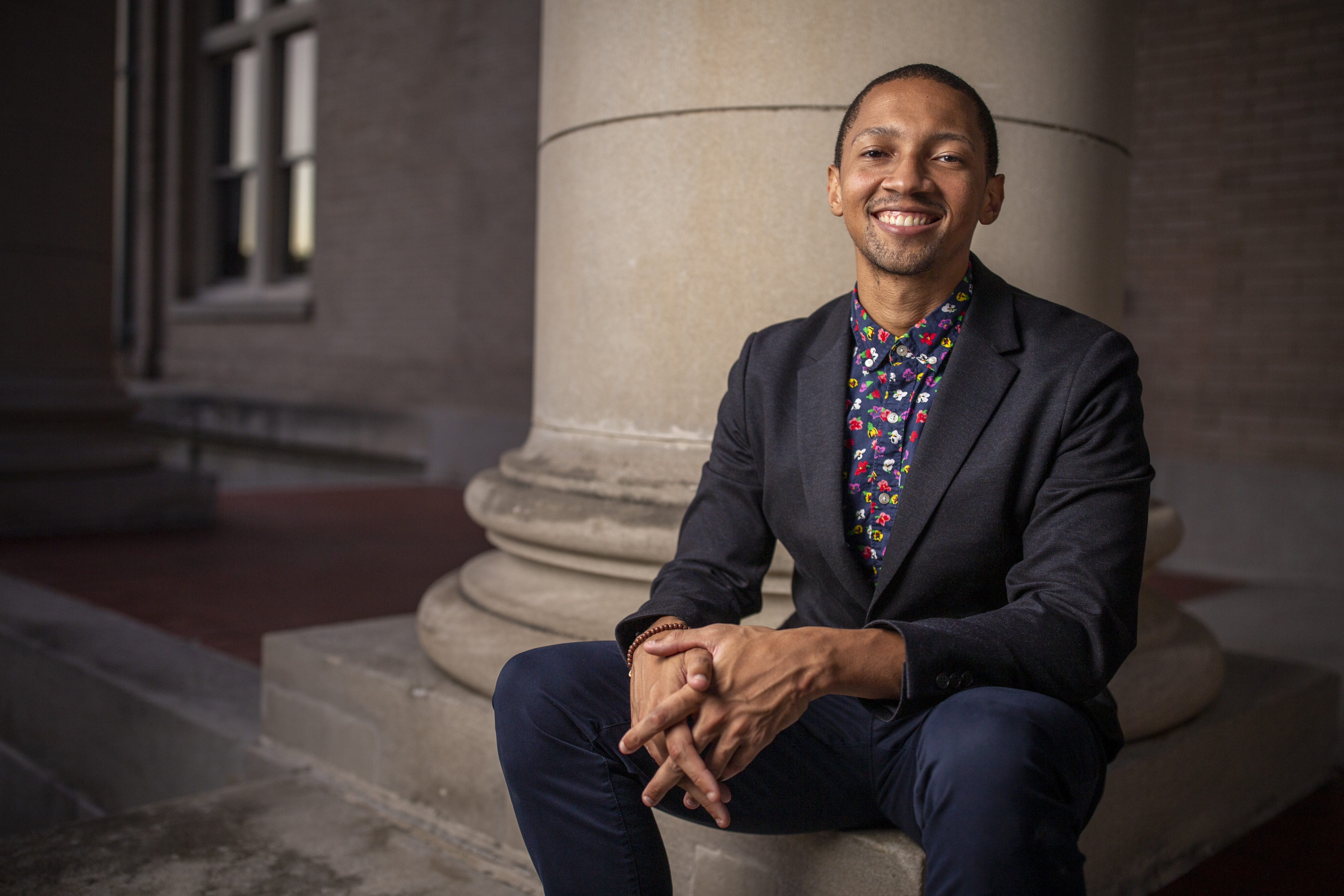
Philosophical Persona
I am an old-school systematic metaphysician in a new-school specialized world. I also introduce elements of pragmatism and social justice into high church analytic metaphysics (and vice versa).
General Metaphysics (Neo-Idealism)
Outside of social ontology and social philosophy, my main research project defends a new version of philosophical idealism. Traditionally, metaphysics is the study of the most general features of reality; metaphysics is neither a conceptual nor empirical inquiry. Idealism, in contrast, holds that reality itself depends in some sense on mind or language. I ask: can reflection on our concepts alone teach us something substantive about the nature of reality, independently of further empirical facts? I answer: yes!
I explore the idealist idea in a few papers. Building on recent work by Thomas Hofweber, I explore approaches to metaphysics that appeal to inescapable concepts — concepts we cannot rationally give up for the purposes of inquiry, such as truth, fact, and the basic concepts of logic. In “Relatively Inescapable Concepts”, I extend Hofweber’s framework by arguing that inescapability should attach to families of concepts, individuated by function, rather than to individual concepts. In “Neo-Hegelian Idealism”, I go even further, giving a historicist account of idealism, influenced by thinkers like Robert Brandom and Hegel. “Logical Inferentialism Implies Logical Idealism” defends a conditional claim: if logical inferentialism is true, then idealism (more generally) is true.
In the past, I have also defended pluralism about metaphysical grounding. For more specific examples of my research, see my publications page.
Areas
Areas of Specialization: Metaphysics, Social Ontology, Social Philosophy
Areas of Competence: Philosophy of Language, Social Philosophy, Logic
Education
Massachusetts Institute of Technology | PhD in Philosophy | 2012 - 2017
University of North Carolina at Chapel Hill | BA in Philosophy | 2008 - 2012
Spirit Animal
The octopus. I have my hands on a lot of things.
Social Ontology (The Spatial Theory)
In social ontology,1 I argue for a spatial, scalar theory of social categories. Instead of identifying as men or women, many people now identify as non-binary, agender, or genderqueer. Instead of identifying as gay or straight, many people now identify as bisexual, pansexual, or demisexual. There is an emerging shift away from identifying with the standard binary gender (male/female) and sexual orientation (gay/straight) categories. This shift has frightened some and been a source of confusion for others. My new book presents a new way to understand gender and sexuality beyond the binary categories: the spatial theory. On this view, gender and sexuality are best understood as social spaces that individuals locate themselves within. For a longer summary, see my book page.
More broadly, my work in social ontology explores the idea of social indeterminacy and vagueness. The social world seems vague, at many cases. It is vague whether a certain law applies, whether a certain person counts as eligible to be a member of a group, whether a certain social norm is being obeyed. What do we think of such cases? And what do we do in such cases? My work explores the idea that the social world is really, truly, genuinely, deeply indeterminate.